Aircraft Brightwork Polishing at Zurich Airport — Mirror Finish, Lasting Protection
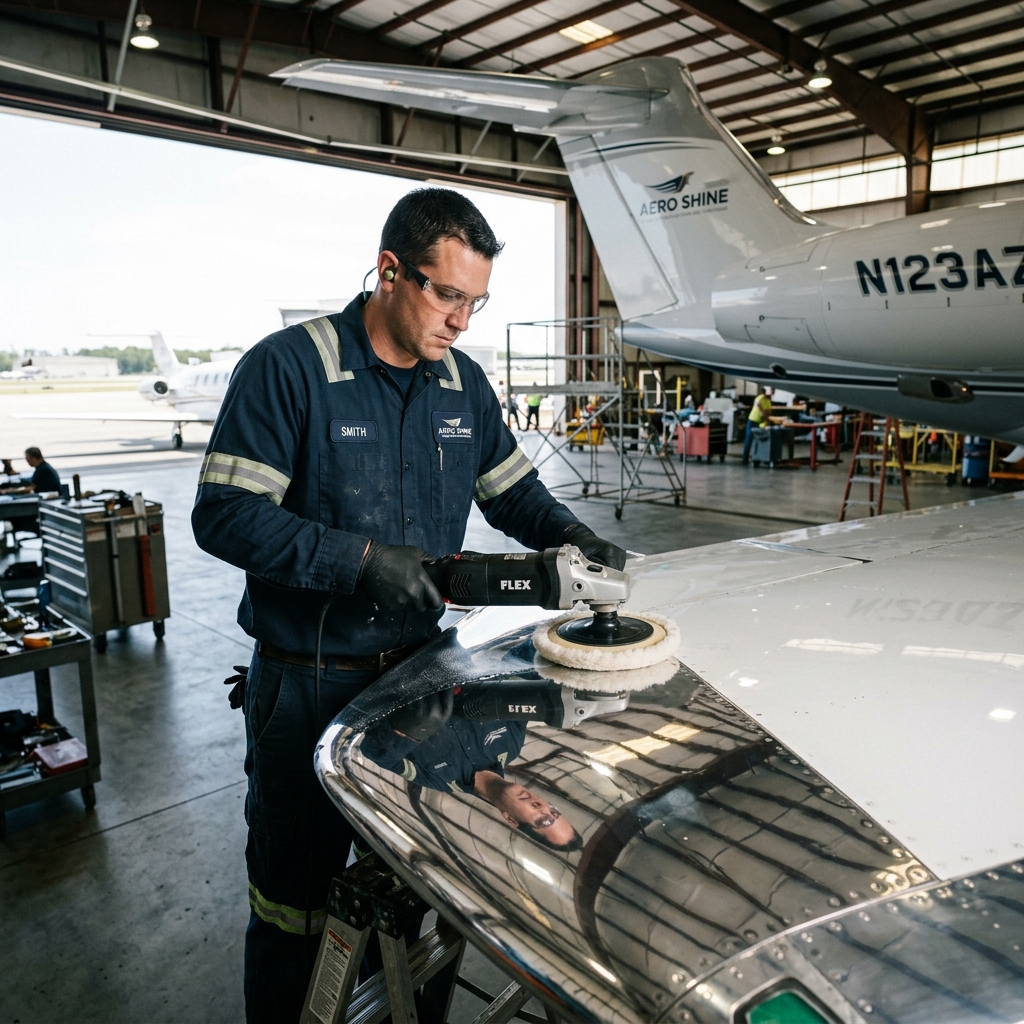
Of all the services available in business aviation ground support, brightwork polishing is perhaps the most visually dramatic. An aircraft with oxidised, pitted, or scratched aluminium brightwork looks aged regardless of how clean the rest of the exterior is. The same aircraft with freshly polished brightwork looks like it just left the completion centre.
We provide specialist aircraft brightwork polishing at Zurich Airport, covering all raw aluminium and metal surfaces — from leading edges and engine inlets to thrust reversers, propeller spinners, and exhaust surrounds.
What Is Aircraft Brightwork?
Aircraft brightwork refers to unpainted metal surfaces — typically raw aluminium or stainless steel — found across the exterior of an aircraft. The most common brightwork areas include:
- Wing leading edges — the forward edge of each wing
- Engine inlets — the interior lip and forward cowling
- Thrust reversers — the aft nacelle panels on jet engines
- Propeller spinners — the polished aluminium nose cone on turboprop aircraft
- Exhaust surrounds — the area around jet pipe exits
- Cockpit window frames — the exterior aluminium surrounds
- Ventral and dorsal strakes
These surfaces are exposed to the full force of airflow, UV radiation, rain erosion, and chemical contamination from de-icing fluids and exhaust gases. Without regular polishing, they oxidise, pit, and develop surface corrosion that is increasingly difficult and expensive to reverse.
The Brightwork Polishing Process
Polishing brightwork is done with unique techniques and standards. Leading edges, engine inlets, thrust reversers and propeller spinners are polished to a mirror condition and brilliant shine. This process removes scratches, water spots, oxidation, and gouges.
Our brightwork polishing process at Zurich follows a structured multi-stage approach:
Stage 1 — Surface assessment and preparation
Each brightwork surface is assessed for condition — degree of oxidation, depth of scratching, presence of pitting. The appropriate polishing compound grade is selected for the surface condition rather than applying a single product across all areas.
Stage 2 — Compound cutting
An aviation-approved cutting compound is applied by machine polisher to remove oxidation, surface scratches, and contamination. This stage restores the raw aluminium surface and reveals the underlying reflectivity.
Stage 3 — Polish and refine
A finer polishing compound removes any marks left by the cutting stage and brings the surface to a high-gloss mirror finish.
Stage 4 — Protection
A metal sealant is applied to protect the polished surface from re-oxidation, UV exposure, and contamination. This significantly extends the interval before re-polishing is required.
How Often Should Brightwork Be Polished?
A regular brightwork polishing routine helps prevent deep scratches and pitting. Aircraft owners should aim to clean brightwork at least once every six months. For aircraft based at Zurich and operating across European and Alpine routes — where UV exposure, salt air, and de-icing chemical exposure are regular factors — a polishing interval of every 4–6 months is recommended for maintained aircraft.
Aircraft coming out of storage or arriving from markets with high UV exposure (Middle East, Africa, Southern Europe) will typically require more intensive treatment before a standard maintenance polish schedule can be established.
Why Regular Polishing Reduces Long-Term Costs
Oxidation and pitting are progressive. Surface oxidation left untreated penetrates deeper into the aluminium, eventually requiring mechanical resurfacing or panel replacement — a significantly more expensive intervention than routine polishing. Regular polishing not only enhances appearance — it also helps prevent oxidation and aluminium pitting, reducing long-term maintenance costs.
For aircraft owners treating their aircraft as an asset to be maintained and eventually sold or traded, brightwork condition is one of the first things a buyer or appraiser examines. Consistent polishing records contribute meaningfully to residual value.
Frequently Asked Questions
Can scratches and gouges be removed from brightwork?
Light to moderate scratches and surface gouges can be removed through the compound cutting stage of the polishing process. Deep gouges that have penetrated into the aluminium substrate may require assessment by an approved maintenance organisation before polishing.
How long does brightwork polishing take?
A full brightwork polish on a midsize jet typically takes 6–10 hours. Light jets can be completed in 4–6 hours. Large cabin aircraft with extensive nacelle surfaces may require a full day. All work is conducted in a hangar environment.
Is the polishing process safe around painted surfaces?
Yes. Our technicians mask all adjacent painted surfaces before beginning the polishing process. Aviation-approved masking materials and techniques are used to ensure no compound contacts the aircraft paint.
Do you offer a combined exterior wash and brightwork package?
Yes. An exterior wet wash followed by a full brightwork polish is our most popular scheduled maintenance package for based aircraft at Zurich. Contact us for package pricing.