Aircraft Exterior Cleaning at Zurich Airport — Everything You Need to Know
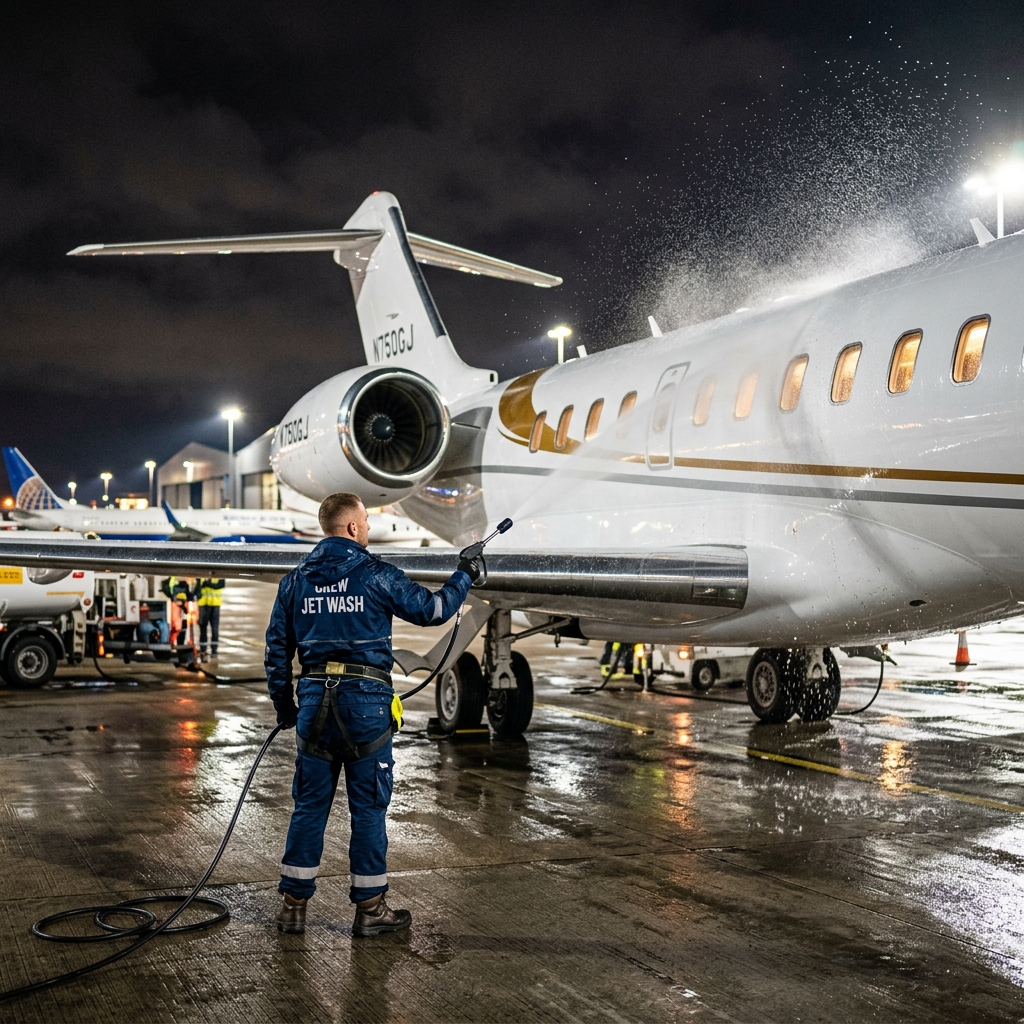
The exterior of a business jet is the first thing a client, passenger, or counterpart sees before boarding. At Zurich Airport — one of Europe's premier business aviation hubs — the standard expected on the ramp is uncompromising. An aircraft that arrives dirty signals neglect. An aircraft that arrives clean signals exactly the opposite.
This guide covers everything operators and owners based at LSZH need to know about aircraft exterior cleaning at Zurich Airport — what the process involves, which service is right for each situation, and how to protect your aircraft's finish over the long term.
What Does Aircraft Exterior Cleaning Involve?
A professional aircraft exterior wash is not a car wash scaled up. It is a precision cleaning operation conducted by trained technicians using aviation-approved products and equipment calibrated to avoid damage to paint, acrylic window panels, antennas, pitot tubes, and other surface-mounted components.
A full exterior clean typically covers:
- Fuselage, wing, and empennage surfaces
- Engine nacelles and thrust reverser areas
- Leading edge cleaning and degreasing
- Landing gear and wheel well cleaning
- Windshield and cabin window cleaning
- Static wick and antenna care
- Hand-drying to prevent water spotting
Wet Wash vs. Dry Wash — Which Does Your Aircraft Need?
Wet wash is the most thorough exterior cleaning option. Water and aviation-approved detergent are applied to all surfaces, agitated by hand, and rinsed clear. It removes exhaust staining, de-icing fluid residue, insect contamination, and accumulated environmental deposits that a dry wash cannot fully address. For aircraft based at Zurich, a full wet wash is recommended every 4–6 weeks depending on utilisation and routing.
Dry wash uses waterless aviation cleaning solutions applied by hand. It is faster, requires no water, and is ideal for rapid turnarounds or situations where ramp water use is restricted. Trained technicians apply dry washing solutions using microfibre cloths, working section by section across the fuselage, wings, and empennage to produce a clean, streak-free finish without the time requirement of a full wet wash. For transient aircraft at LSZH with tight departure windows, dry wash is the practical choice.
Paint Protection — Waxing and Sealants
A clean aircraft is a good start. A protected aircraft is a better investment. Aircraft paint wax and sealant treatments are applied after a wet wash to create a barrier against UV degradation, acid rain, and environmental contamination — all of which are relevant considerations for aircraft operating across European and Alpine weather patterns.
Paint sealants last significantly longer than traditional carnauba waxes and reduce the cleaning effort required between washes. For privately owned aircraft and managed fleet aircraft based at Zurich, a paint protection treatment applied twice per year is a cost-effective way to maintain finish quality and preserve long-term aircraft value.
De-Ice Boot Maintenance
Aircraft based in Switzerland and operating through Alpine winters require specific attention to pneumatic de-ice boot condition. A three-step process of stripping, conditioning and sealing pneumatic de-ice boots restores them to a high gloss shine while protecting them against cracking and delamination. Regular de-ice boot treatment extends the life of the boots significantly and reduces the likelihood of in-service failures — a maintenance saving that far outweighs the cost of routine care.
How Often Should an Aircraft Be Washed at Zurich?
The appropriate cleaning frequency depends on aircraft utilisation, route network, and storage environment. As a general guide:
| Aircraft type | Recommended frequency |
|---|---|
| Based aircraft, moderate use | Every 4–6 weeks |
| High-utilisation charter aircraft | Every 2–3 weeks |
| Transient / visiting aircraft | Per visit, as required |
| Hangar-stored, low use | Every 6–8 weeks |
*Aircraft routing through Southern European, Middle Eastern, or African destinations will accumulate contamination faster and may require more frequent exterior attention.
Frequently Asked Questions
Can you clean aircraft on the ramp at LSZH?
Yes. We hold ramp access and operate in compliance with all LSZH ground handling regulations. Wet wash services are available at designated ramp washing areas and within hangar facilities.
Do you use Boeing-approved cleaning products?
Yes. All cleaning products used on aircraft surfaces are Boeing-approved and certified safe for use on painted aluminium, composite materials, and acrylic windows.
How long does a full exterior wet wash take?
Between 2 and 5 hours depending on aircraft size. Light jets can be completed in a standard overnight ground stop. Large cabin aircraft are best scheduled for a dedicated hangar visit.
Do you offer scheduled cleaning programmes?
Yes. We offer monthly and quarterly cleaning programmes for based aircraft at LSZH, with preferential scheduling and fixed pricing. Contact us to discuss a programme tailored to your fleet.